Our Departments
- Sciatica
- Slipped Disc
- Cervical & Lumber spondylosis
- Disc Bulge
- Spondylolisthesis
- Frozen Shoulder
- Shoulder Impingement
- Sprain & Strains
- Coccydenia
- Si Joint Dysfunction
- Parkinson's Disease
- Multiple Sclerosis
- Stroke (Paralysis)
- Facial Palsy
- Sports Injury & Rehab
- Tennis Elbow
- Fire cupping
- Hydro c
- Herbal c
- Sports c
- Wet c
- Rehab for orthopedic conditions with c
- Gynaecological conditions with c
- Dental conditions with c
- Pulmonary conditions with c
- Weight loss with c
- Anxiety and depression with c
- Arthritis conditions with c
Expert Doctor

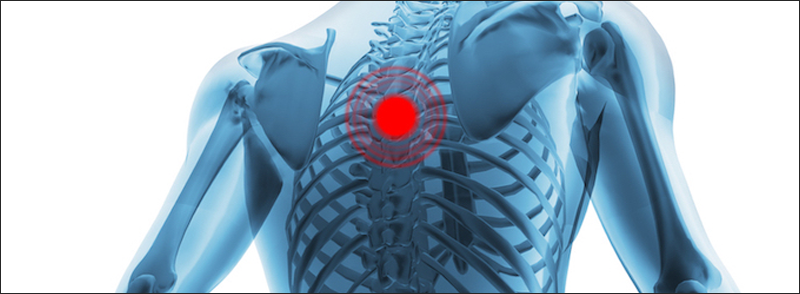
Upper back pain can be a little like salsa or Buffalo wings—we know, bear with us.
- First, there’s mild: Just a twinge of the tastebuds if we’re talking sauce, and slight pain that’s easy to ignore when it comes to the upper back.
- Then there’s medium/moderate: Now we’re getting somewhere. You’re gonna feel it, but usually only if you take a deep breath or sneeze or move too quickly.
- Finally, we’ve got spicy: the equivalent to pain so intense you feel the burn from doing the simplest daily tasks, or even nothing at all!
Thing is, upper back pain affects everyone differently. Partly that’s because there are so many possible reasons for your upper back (also mid back) pain. The first step in solving your upper back pain problem is understanding why it’s happening. To do that, start with learning your anatomy.
What Is the Upper Back?
If you want to understand your upper back pain, start with an anatomy lesson. Pain in the upper and/or mid back is less common than lower back or neck pain. The upper back is the region below the cervical spine (neck) and above the low back (lumbar spine). The upper back is called the thoracic spine, and it is the most stable part of the spine. The range of motion in the upper back is limited because of the spine’s attachments to the ribs (rib cage).
Think of your spine as a tree trunk. It keeps you standing upright. It connects parts of your skeleton to each other. It carries the weight of your upper body.
Since that’s a massive job, the spine itself shares some of the physical load with nearby muscles, some of which include:
- Trapezius: Near your shoulder blade, helps you stand straight and throw
- Latissimus dorsi: Lower on your back, helps with arm movement and breathing
- Rhomboids: Adjacent to trapezius, supports your shoulders and helps you pull
When you hurt your upper or mid back doing yard work or playing tennis, chances are high you’ve injured one of these muscles. Spinal cord injury is less common, though possible – especially due to traumatic injury among any age group, or osteoporosis in people older than 65. Your spine is a long column of bones (vertebrae), which are separated by discs that act as shock absorbers. The discs are firm but not solid, with a cartilage exterior and a gel-like core. The spinal column protects the spinal cord, which has nerves that carry messages from the brain to other parts of the body. (The nerves also poke out from spaces between the vertebrae.)
Even though you might think of your spine as one long structure, doctors see it as three shorter ones: the cervical spine (neck), thoracic spine (upper and mid back) and lumbar spine (low back).
Your thoracic spine moves very differently than your cervical and lumber spine. In fact, it doesn’t move a whole lot. The thoracic spine is connected to your ribs and sternum, making it rigid and stable – so it’s less prone to injury. That’s one of the reasons you can usually expect upper back pain to be related to your muscles, not to the spine itself.
Symptoms
If you hurt your upper back during the course of daily or weekend-warrior activity, you might experience:
- Pain
- Tightness
- Stiffness
- Tenderness to touch
- Headache
These are typical symptoms of musculoskeletal strain, though they can and do occur with spinal injury. If your upper back pain is related to the bones, nerves, or discs of your thoracic spine, your symptoms may also include:
- Pain in the lower back
- Pain down the legs
- Incontinence (bowel and/or bladder leakage)
- Numbness or weakness in your legs
For mild upper back soreness that you can clearly link to an activity, there’s no need to rush to the doctor for an exam. When you have upper back pain along with other symptoms, it’s worth a call to your doctor to determine next steps.
Causes
Upper back pain is usually caused by soft tissue injuries, such as sprains or strains, or muscle tension caused by poor posture or looking downward for long periods.
Common behaviors and activities that can cause upper back pain include:
What Is Low Back Pain?
The low back, also called the lumbar region, is the area of the back that starts below the ribcage. Almost everyone has low back pain at some point in life. It’s one of the top causes of missed work in the U.S. Fortunately, it often gets better on its own. When it doesn't, your doctor may be able to help with several effective treatments.
Symptoms of Low Back Pain
These might range from a dull ache to a stabbing or shooting sensation. The pain may make it hard to move or stand up straight. Pain that comes on suddenly is “acute.” It might happen during sports or heavy lifting. Pain that lasts more than 3 months is considered “chronic.” If your pain is not better within 72 hours, you should consult a doctor.
Symptoms That Require Urgent Care
See a health care professional any time you have back pain after a fall or injury. The same goes if you have back pain with bowel or bladder control problems, leg weakness, fever, or pain when coughing or peeing.
Muscle Strain or Sciatica?
Muscle strain is often the cause of back pain from heavy lifting or vigorous exercise. But sometimes it’s due to small jelly-filled disks meant to protect the space between vertebrae. When one of these disks bulges or breaks, it can push on a nerve. When it’s the sciatic nerve, pain runs from the buttock down one leg. This is sciatica.
Back Pain Culprit: Your Bag
Although you may wear your purse, backpack, or briefcase over your shoulder, it is the lower back that supports the upper body -- including any additional weight you carry. So an overstuffed bag can strain the lower back, especially if you carry it day after day. If you must tote a heavy load, consider switching to a wheeled briefcase.
Back Pain Culprit: Your Workout
Overdoing it at the gym or golf course is one of the most common causes of overextended muscles leading to low back pain. You're especially vulnerable if you tend to be inactive during the work week and then spend hours at the gym or softball field on the weekend.
Back Pain Culprit: Your Posture
Moms were right when they said, "Stand up straight!" Your back supports weight best when you don't slouch. This means sitting with good lumbar support for your lower back, shoulders back, with feet resting on a low stool. When standing, keep weight evenly balanced on both feet.
Back Pain Culprit: Herniated Disk
The spine's vertebrae are cushioned by gel-like disks that are prone to wear and tear from aging or injuries. A weakened disk may rupture or bulge, putting pressure on the spinal nerve roots. This is known as a herniated disk and can cause intense pain.
Back Pain Culprit: Chronic Conditions
Several chronic conditions can lead to low back pain.
- Spinal stenosis is a narrowing of the space around the spinal cord, which can put pressure on the spinal nerves.
- Ankylosing spondylitis inflames the joints of the spine, and sometimes the shoulders, hips, ribs, and other areas too. It causes chronic back pain and stiffness. In serious cases, spinal vertebrae start to fuse (grow together).
- Fibromyalgia causes widespread muscle aches, including back pain.
Who's at Risk for Low Back Pain?
Most people experience back pain first when they're in their 30s. The odds of additional attacks increase with age. Other reasons your low back may hurt include:
- Being overweight
- Being sedentary
- Lifting heavy stuff on the job
Diagnosing Low Back Pain
To help your doctor diagnose the source of low back pain, be specific in describing the type of pain, when it started, related symptoms, and any history of chronic conditions. Your doctor will probably not need to order X-rays, CT or MRI scans before starting treatment.
Home Care for Low Back Pain
Back pain due to muscle strain will usually get better on its own, but you can take steps to make yourself more comfortable. A heating pad or warm baths may provide temporary pain relief.
The Bed Rest Debate
When your back hurts, you may not feel like getting out of bed. But if the problem is muscle strain, doctors recommend returning to your normal activities as soon as possible. Studies suggest that any more than a day or two of bed rest can actually make the pain worse and may reduce muscle tone and flexibility